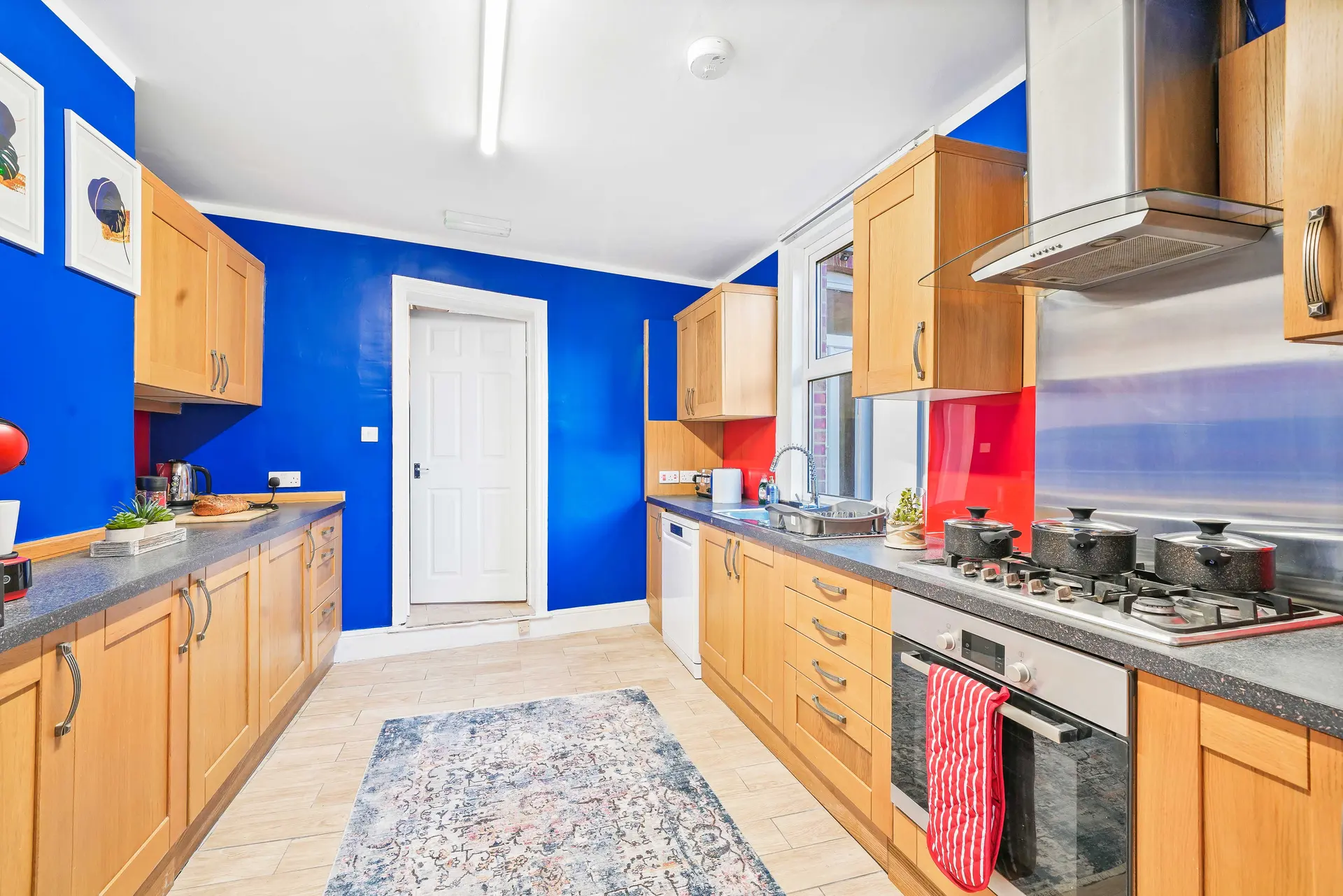
In short: a house in multiple occupation (HMO) is a home rented to 3 or more people who are not one household and who share facilities. Large HMOs always need a council licence, many councils license smaller ones too, and licensed HMOs must meet minimum bedroom sizes. On top of that come fire safety, management duties and, in some areas, planning permission. This guide covers England as of November 2026.
What counts as an HMO
GOV.UK describes an HMO as a property rented out by at least 3 people who are not from one household, such as one family, but who share facilities like the kitchen or bathroom.
The legal tests are in the Housing Act 2004. Besides ordinary shared houses, some flats and converted buildings can count. If you are not sure, the council's private housing team can tell you how it treats a property.
Licensing: when an HMO needs one
| HMO | Licence | Where |
|---|---|---|
| 5 or more people, 2 or more households | Mandatory HMO licence | All of England |
| Smaller HMOs, such as 3 or 4 sharers | Additional licence | Only where the council has a scheme |
| Any rented home in a chosen area | Selective licence (non-HMOs) | Only where the council has a scheme |
A licence lasts a maximum of 5 years. Renting out an unlicensed HMO that needs a licence can bring an unlimited fine. Since 1 May 2026, the maximum civil penalty for certain housing offences has been £40,000 (up from £30,000), and tenants can claim back up to 24 months' rent through a rent repayment order.
Our article "Do I need a licence to be a landlord?" lists current schemes in London, Bristol, Oxford, Nottingham, Manchester and Edinburgh.
Minimum room sizes
Every HMO licence in England must include national minimum bedroom sizes.
| Who sleeps in the room | Minimum floor area |
|---|---|
| One person aged over 10 | 6.51 square metres |
| Two people aged over 10 | 10.22 square metres |
| One child under 10 | 4.64 square metres |
| Any room under 4.64 square metres | Cannot be used for sleeping |
Any part of a room where the ceiling is lower than 1.5 metres does not count towards the floor area. This matters for loft rooms and rooms under sloping ceilings.
Licences must also require the holder to follow the council's arrangements for storing and putting out household waste. Many councils add their own standards for kitchens, bathrooms and shared space, so check the local HMO standards before buying or converting.
Fire safety
Fire is the biggest risk in shared housing, and several rules overlap.
- Smoke alarms: at least one on every storey used as living accommodation.
- Carbon monoxide alarms: since 1 October 2022, in any room used as living accommodation with a fixed combustion appliance, except gas cookers.
- Checks and repairs: alarms must work on the day a new tenancy starts, and faulty alarms must be repaired or replaced once the landlord is told.
- Fire risk assessment: the Regulatory Reform (Fire Safety) Order 2005 applies to common parts of HMOs and blocks of flats. Doncaster Council, for example, says a written assessment is mandatory for properties with five or more occupiers or under a licence, and recommends one for all HMOs.
Many councils, Doncaster among them, use the national LACORS housing fire safety guidance to decide what an individual HMO needs, such as fire doors, alarm systems and escape routes. The answer depends on the size, layout and type of letting. A bedsit-style HMO usually needs more protection than a small shared house.
Councils can fine landlords up to £5,000 for failing to follow a remedial notice on smoke or carbon monoxide alarms.
The HMO management regulations
The Management of Houses in Multiple Occupation (England) Regulations 2006 apply to HMOs whether or not they are licensed. The manager must:
- give every household the manager's name, address and phone number, and display them prominently in the HMO
- take safety measures to protect occupiers
- maintain the water supply and drainage
- supply the latest gas safety certificate to the council within 7 days of a written request
- have the fixed electrical installation inspected and tested at least every five years, and give the council the certificate within 7 days of a written request
- maintain the common parts, fixtures, fittings and appliances, and each household's own living accommodation
- provide waste disposal facilities
The same regulations also place duties on the occupiers themselves.
Separate electrical rules for all private lets also require a check at least every five years, a copy of the report for tenants, and remedial work within 28 days if the report asks for it. Councils can fine up to £40,000 for breaches.
Planning permission and Article 4
Planning is separate from licensing. A licence does not give planning permission, and planning permission does not give a licence.
- Use class C4: a dwelling used as an HMO by up to six residents.
- Seven or more residents: a large HMO is "sui generis" (a class of its own) and needs full planning permission, as councils such as Bracknell Forest explain.
- Article 4 directions: in many areas, turning a family house (class C3) into a small HMO (C4) is allowed without an application. An Article 4 direction removes that right, so the change needs planning permission.
Examples in RGS's cities:
- Oxford: a citywide Article 4 direction came into force on 25 February 2012, so changing a house into a C4 HMO needs planning permission.
- Manchester: the city council says an Article 4 direction covering HMOs is in force across the city.
Check the council's planning pages before buying a property to use as an HMO. Some councils, such as Oxford, also use planning policy to manage where new HMOs are allowed.
What the Renters' Rights Act changed for HMOs
- Rolling tenancies: since 1 May 2026, HMO tenancies are periodic like all private lets, and section 21 has gone.
- Student lets: a new possession ground lets landlords re-let to new students at the end of the academic year, if all occupiers are full-time students on a joint tenancy in an HMO and notice was given at the start. Purpose-built student accommodation is not covered.
- Hazard fines: since 22 June 2026, councils can fine up to £7,000 for category 1 hazards without first serving an improvement notice.
- Landlord register: from 15 December 2026, region by region, HMOs must be registered on the new national service. An HMO is registered once as a whole property, with its licence details.
Getting it right
HMOs can work well for landlords and sharers, but they carry more rules than a single let. Landlords usually check licensing, planning and room sizes before buying, and keep a compliance file with certificates, risk assessments and inspection records.
If you own an HMO or a house that could be let as one, RGS can talk through property management or guaranteed rent, or make an offer on any property.
Questions about an HMO? Contact RGS Properties.
Common questions
What is the minimum room size in an HMO?
In a licensed HMO in England, a bedroom for one person over 10 must be at least 6.51 square metres, and for two people over 10 at least 10.22 square metres. Rooms under 4.64 square metres cannot be used for sleeping.
How many people make a house an HMO?
At least 3 people who are not from one household, sharing facilities such as a kitchen or bathroom. A licence is always needed when there are 5 or more people from 2 or more households.
Do I need planning permission for an HMO?
A shared house for 3 to 6 people (use class C4) often does not need permission, unless the council has an Article 4 direction. HMOs for 7 or more people need planning permission.
How often must the electrics be checked in an HMO?
The fixed electrical installation must be inspected and tested at least every five years by a qualified person.
Can student HMO landlords still get a property back each summer?
Since 1 May 2026, a new possession ground lets landlords re-let to new students if all occupiers are full-time students on a joint tenancy in an HMO and notice was given at the start. It does not cover purpose-built student blocks.
Questions about your property or a tenancy? Talk to the RGS team.
Sources
- House in multiple occupation licence (GOV.UK)
- Licensing of Houses in Multiple Occupation (Prescribed Description) (England) Order 2018, article 4 (legislation.gov.uk)
- Licensing of Houses in Multiple Occupation (Mandatory Conditions of Licences) (England) Regulations 2018 (legislation.gov.uk)
- Management of Houses in Multiple Occupation (England) Regulations 2006 (legislation.gov.uk)
- Management of HMOs Regulations 2006, regulation 3 (legislation.gov.uk)
- Management of HMOs Regulations 2006, regulation 6 (legislation.gov.uk)
- Smoke and Carbon Monoxide Alarm (Amendment) Regulations 2022: guidance for landlords and tenants (GOV.UK)
- Electrical safety standards in the private and social rented sectors: guidance (GOV.UK)
- Fire safety in houses in multiple occupation (Doncaster Council)
- Town and Country Planning (Use Classes) Order 1987, Schedule (legislation.gov.uk)
- Houses in Multiple Occupation (HMOs) and planning permission (Bracknell Forest Council)
- Planning control for houses in multiple occupation (Oxford City Council)
- Article 4 direction: changing the use of your property (Manchester City Council)
- Renters' Rights Act: an overview for landlords (GOV.UK)
- Guide to the Renters' Rights Act (GOV.UK)
- Implementing the Renters' Rights Act 2025: our roadmap (GOV.UK)
- Register your rental property service: guidance for landlords (GOV.UK)
- Crack down on dangerous rented homes as new £7k fines kick in (GOV.UK, 21 June 2026)
- Renters' Rights Act: what's next (NRLA, 30 April 2026)
General information, not legal, tax or financial advice. Checked on 14 November 2026. Rules change, so check the official sources or take advice for your own situation.